KEEP THE MONEY WE´LL TAKE THE SPACE
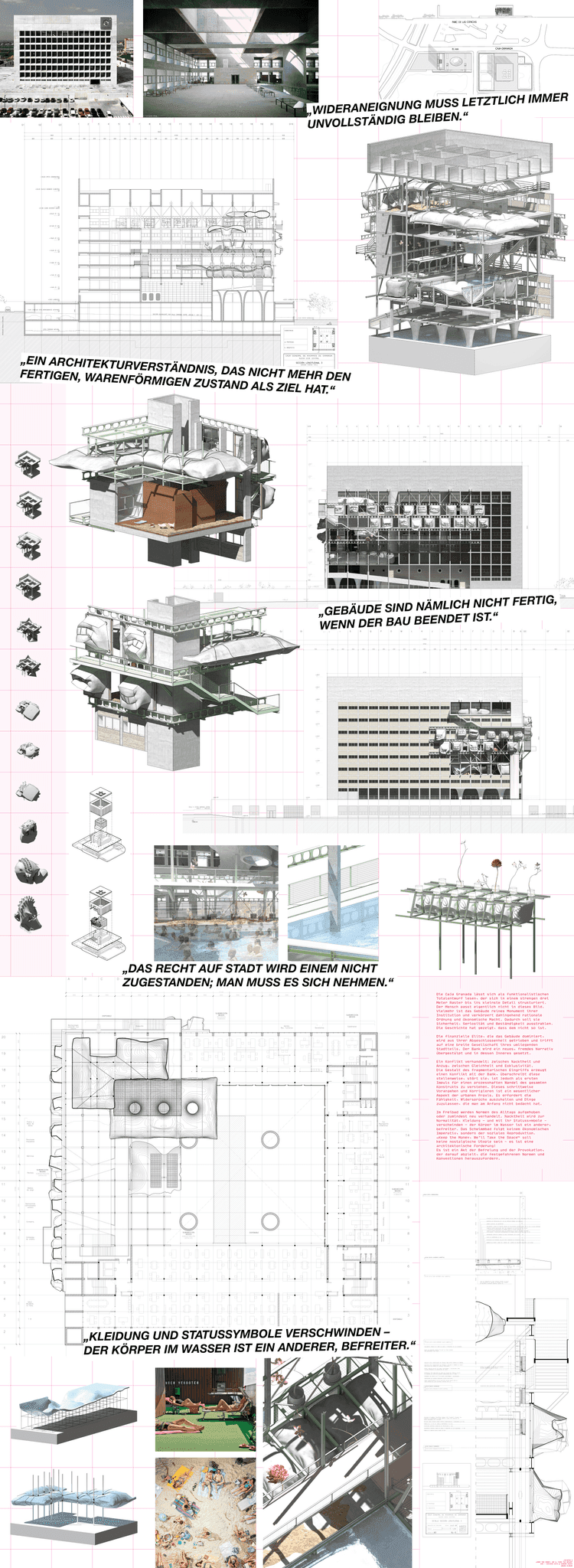
The Caja Granada is regarded as a functionalist machine, structured down to the smallest detail within a strict three-metre grid. People do not really fit into this picture. Rather, the building is a pure monument to its institution and, as such, embodies rational order and economic power. It is intended to radiate a sense of security, reliability and stability. History has shown that this is not the case.
In this sense, the bank is regarded as a building in need of repair, whose occupied space of 40,000 square metres is completely out of proportion to actual requirements. In urban terms, the bank functions as a walled-off landmark, forbidding and detached from the everyday lives of the residents. In view of this, there is no choice: its space must be occupied, and its imposing structure must be returned to the public as compensation. Thus, the bank is confronted with a narrative of reappropriation entirely unfamiliar to it until now. “For the right to the city is not granted; one must take it.”¹
At the outdoor swimming pool, the norms of everyday life are suspended, or at least renegotiated. It is not governed by any economic imperative. Nudity becomes the norm; clothing – and with it, status symbols – disappear – the body in the water is a different, liberated one.
This brings two groups of people together within the Caja Granada building. Bank employees and bathers cross paths at junctions and passageways. There is no way to avoid one another. The financial elite, who dominate the building, are drawn out of their seclusion and encounter the wider public. This conflict disrupts prevailing dress codes, functional divisions and social selection. The naked body becomes the central motif of the space.
To transform the site of capital into a truly public space requires, methodologically speaking, nothing less than a revolution. We usually understand revolution to mean a profound, often rapid transformation of social structures. Etymologically speaking, however, revolution also means revolutio – turning around or rolling back.² This is both a design method and a thematic motif.
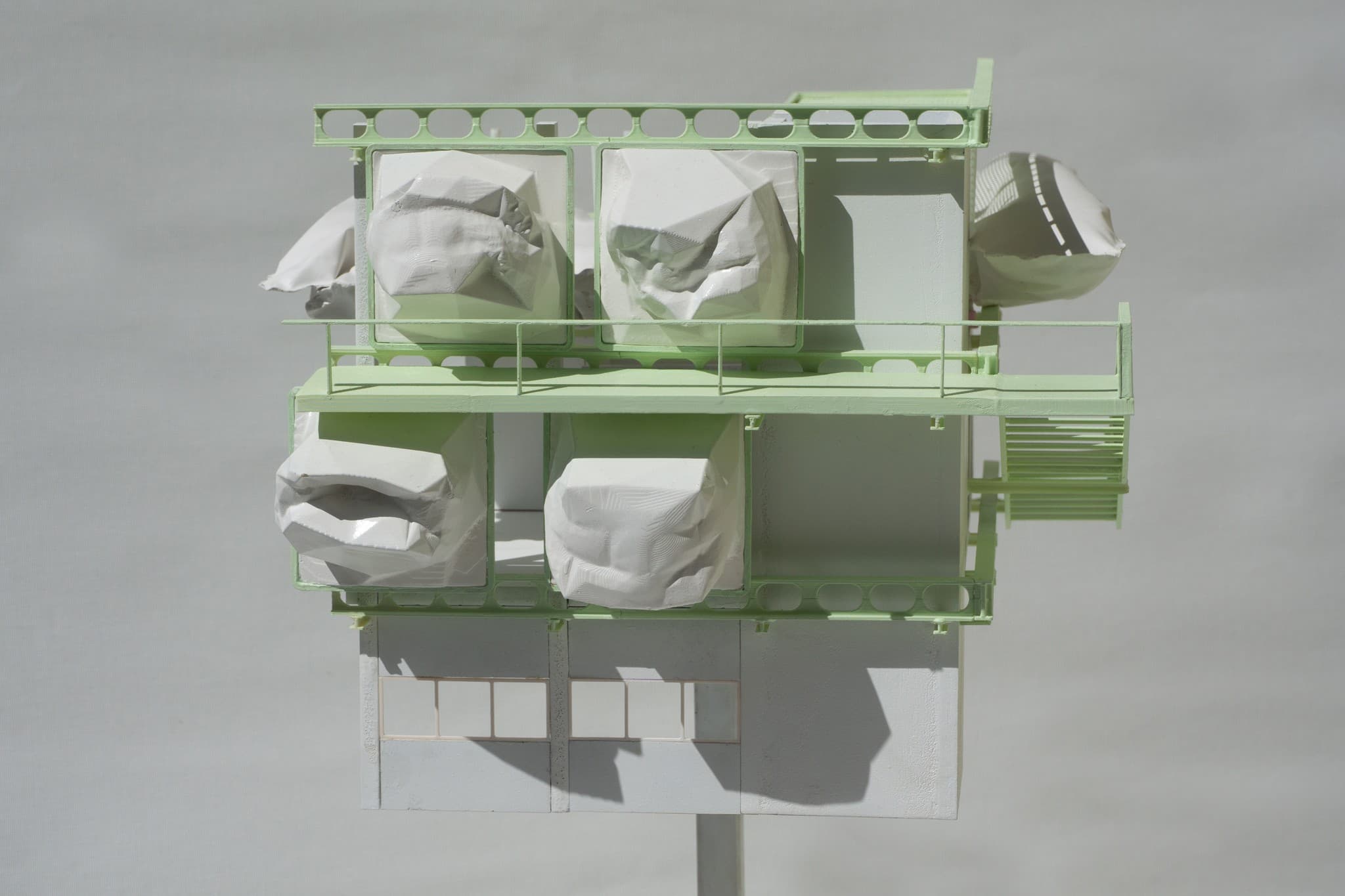
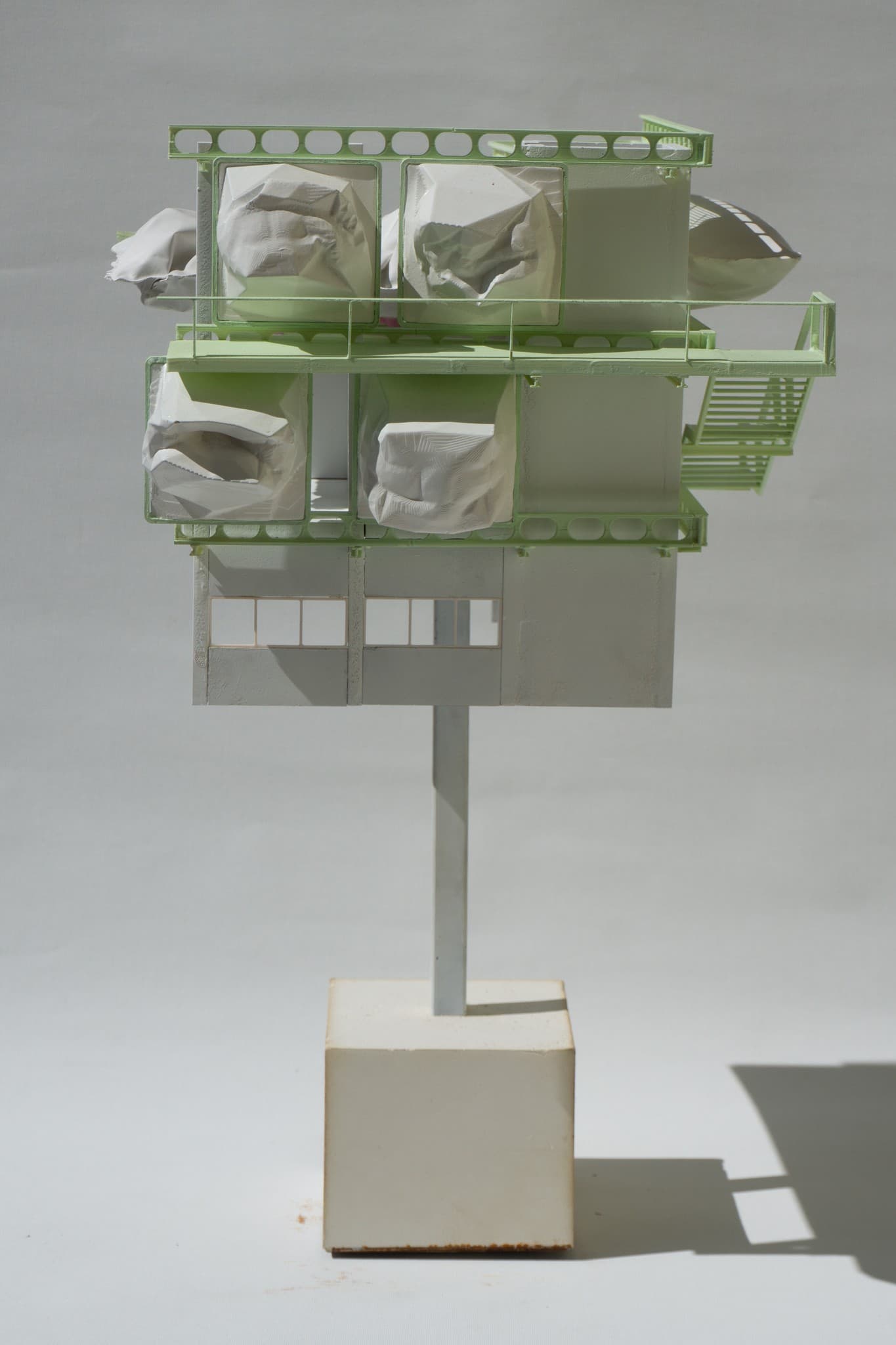
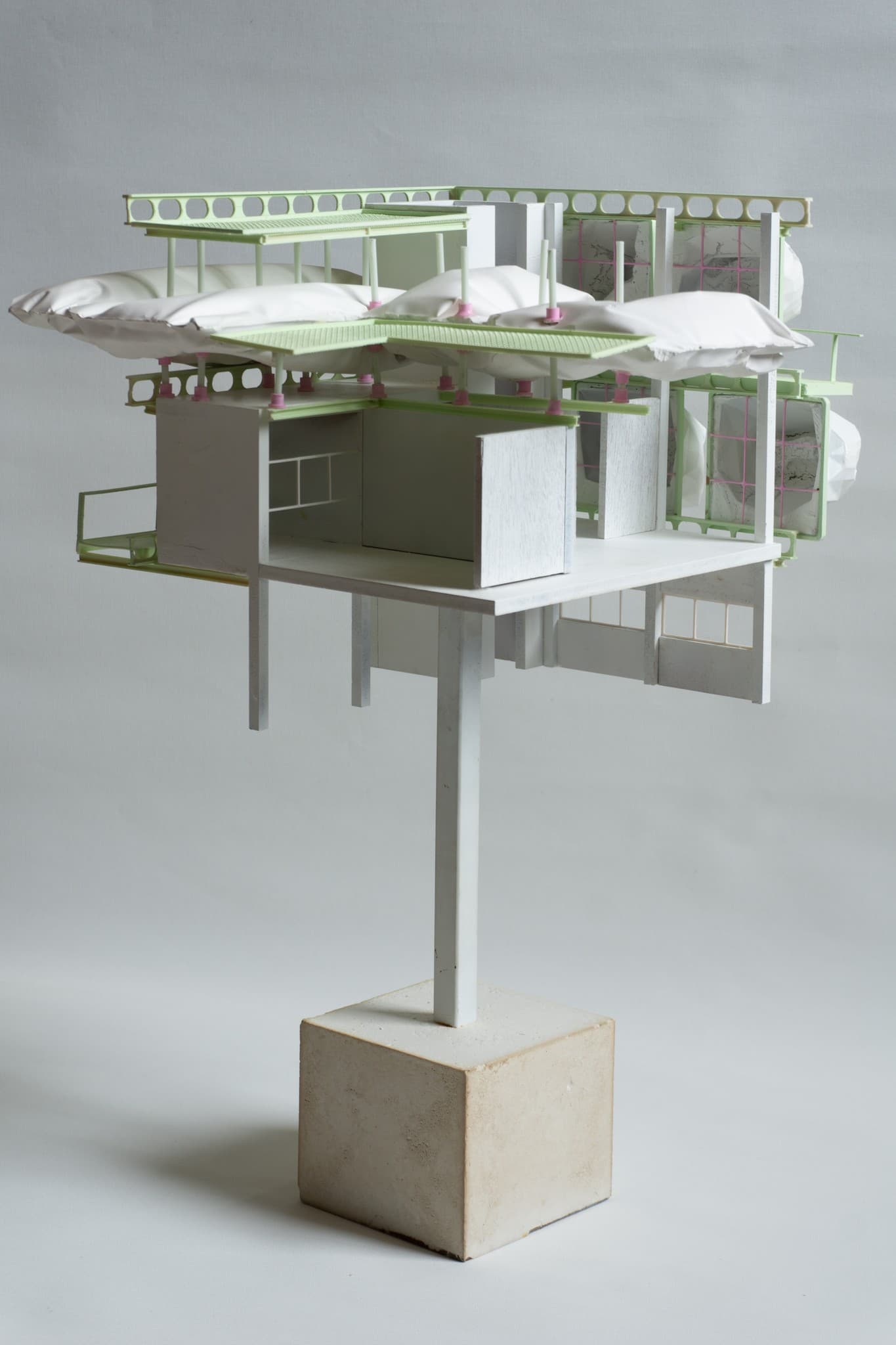
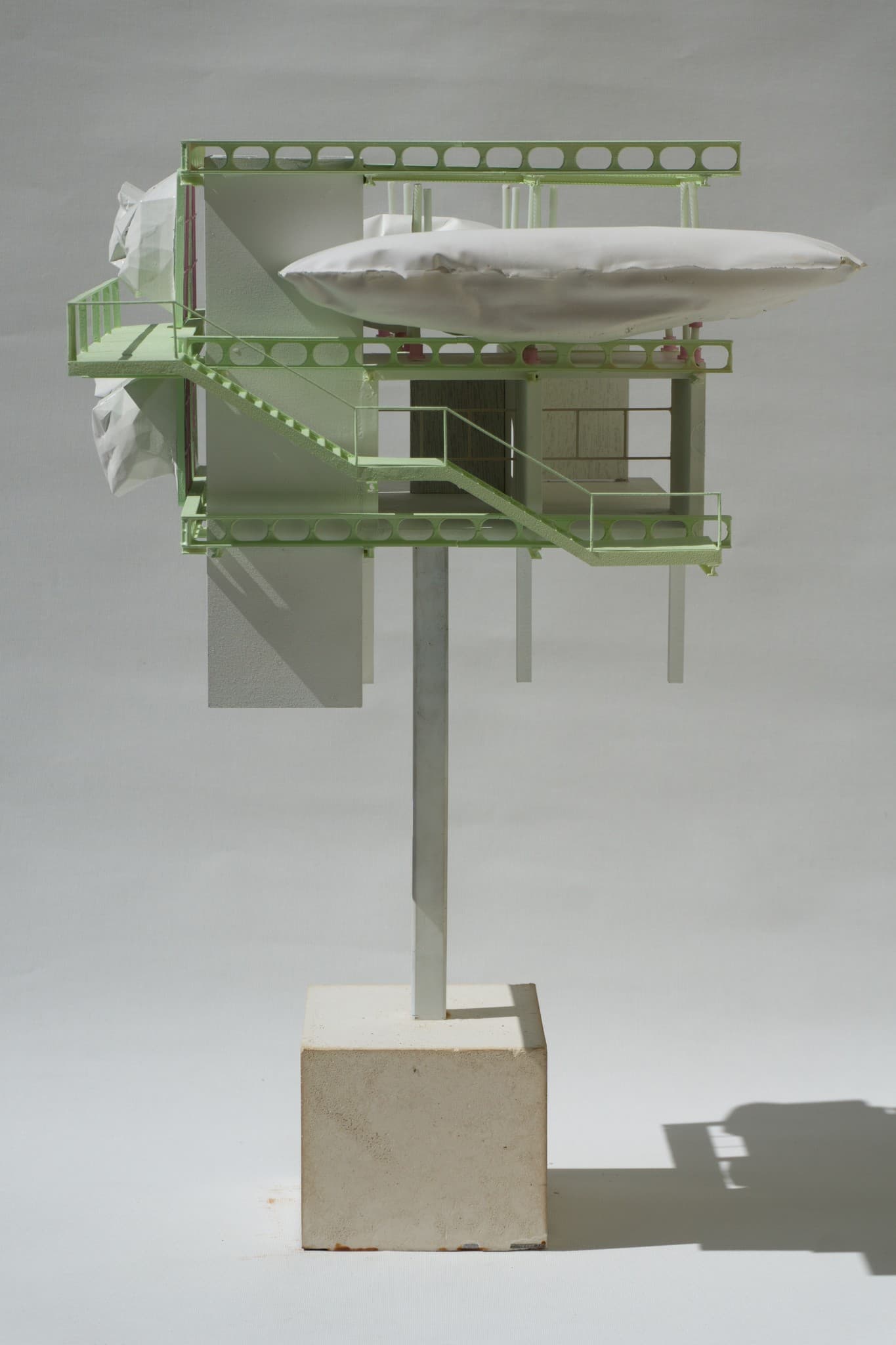
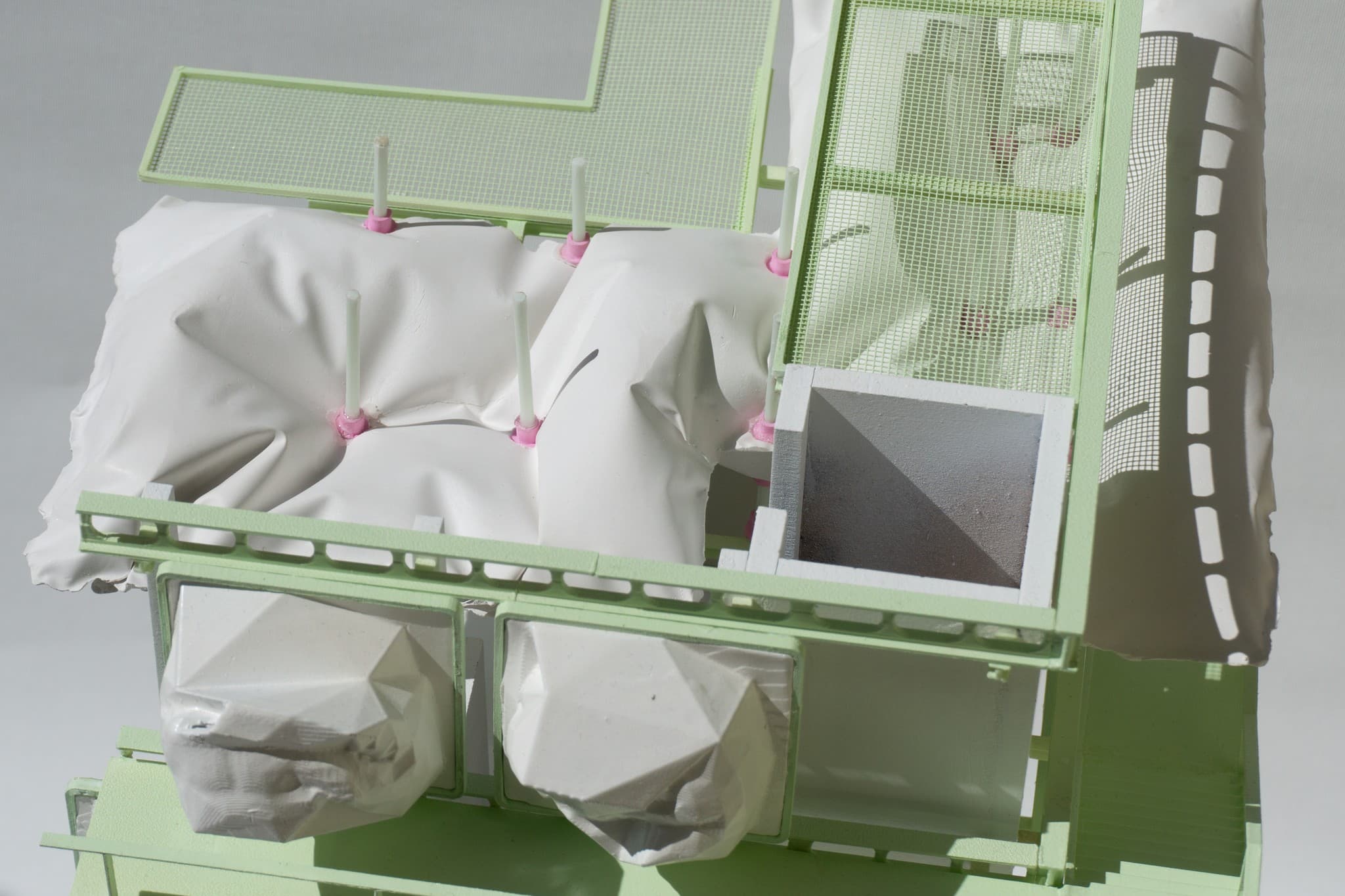
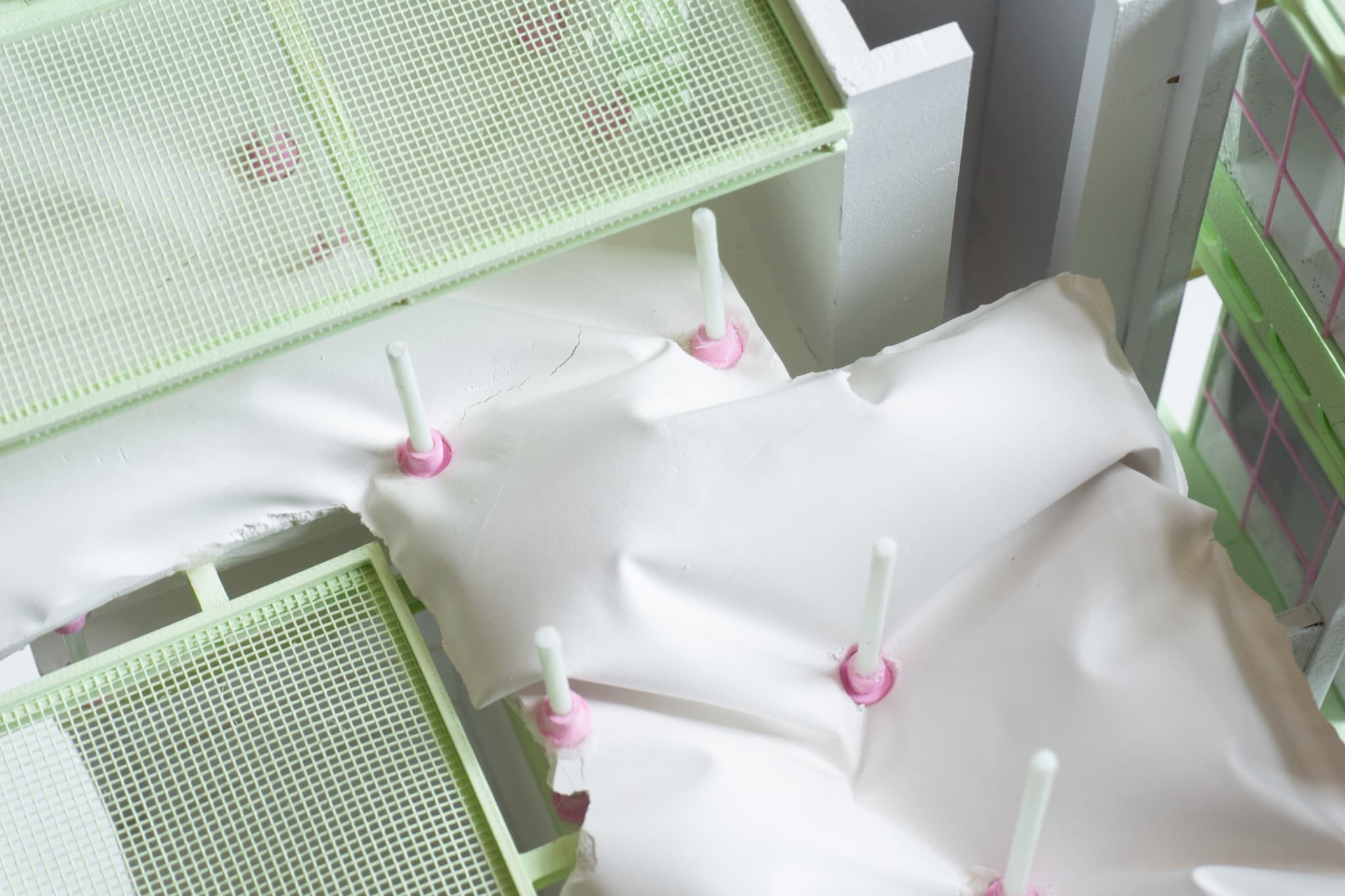
The geometric inversion of the building arises from interpreting the cube as padding and the frame as a membrane. This creates a space that stems from the same fundamental geometric idea, yet undergoes a paradigm shift in its form and, consequently, in its final state. As a result, the building’s sharp shadows are distorted, thereby breaking the hierarchy of the grid. Ecological concepts of vertical planting are set against the grid and fall outside its axes. The industrially prefabricated substructure of the intervention takes precedence over the archaic concrete grid.
The building is thus given a new perspective, even though it essentially remains the same. The building’s shortcomings are transformed into strengths, enabling us to work with the existing structure despite all the criticism levelled at it.
This prototypical intervention in the south-western section of the bank should be understood as the initial impetus for a process-driven transformation of the machine. It follows an ‘understanding of architecture that no longer regards the finished, commodity-like state as its goal.’³ For ‘contrary to the common but misguided notion, buildings are not finished once construction is complete – even the attempt to keep them in an unchanging state is a questionable endeavour that often prioritises authorship over the act of inhabiting and living in them.’⁴
“Keep the Money, We’ll Take the Space” is not meant to be a nostalgic utopia – it is an architectural demand! It is an act of liberation and provocation, aimed at challenging entrenched norms and conventions.